Back to search
Filing index
Plain-English explainers and filing-backed rankings for readers who want to understand the board before they judge the pay.
Research
The SEC buries CEO pay in 200-page filings. We pull the compensation table, the governance context, and the pattern worth arguing about.
- Published briefs
- 23
- Research reports
- 9
- Explainers
- 14
Each guide maps back to SEC-backed compensation records.
Rankings and original research built from the latest filings.
Guides for readers who know the headline but not the filing.
Lead brief
Newest research first
Accenture CEO PayExplainer
How Much Does Julie Sweet Make? Accenture CEO Compensation FY2025
Julie Sweet received $29,641,903 ($29.6M) in total compensation for FY2025, up 19.0% from the prior year. Figures come from Accenture's SEC proxy filing. See /t/ACN.
Aug 26, 20264 min
Read briefing
Evidence first
Read the board’s pay case before you read the spin.
NVIDIA CEO Pay
NVIDIA CEO PayExplainer
How Much Does Jensen Huang Make? NVIDIA CEO Compensation FY2026
Jen-Hsun Huang (often called Jensen Huang) received $36,343,830 ($36.3M) in total compensation for FY2026, down 27.1% from the prior year. Figures come from NVIDIA's SEC proxy filing. See /t/NVDA.
Aug 26, 20264 min
Read briefing
Netflix Co-CEO Pay
Netflix Co-CEO PayExplainer
How Much Does Ted Sarandos Make? Netflix Co-CEO Compensation FY2025
Ted Sarandos received $53,905,972 ($53.9M) in total compensation for FY2025. Co-CEO Greg Peters received $53,187,307. Figures come from Netflix's SEC proxy filing. See /t/NFLX.
Aug 26, 20264 min
Read briefing
Named Directors
Named DirectorsExplainer
Highest-Paid Board Members: Named Directors From SEC Filings
Joan E. Herman of Ionis (IONS) is the highest-paid named director in this cut, at $2,696,718 for FY2025. This page ranks named people, not board payroll.
Aug 26, 20264 min
Read briefing
CEO Pay
CEO PayExplainer
How Much Does a CEO Make? Filing-Verified Median, Not an Invented Average
Median and count of filing-verified fiscal-2025 CEO packages from the same warehouse ranking as /rankings/highest-paid-ceos-2026. Size-bracket pay lives on /ceo-salary-by-company-size.
Aug 18, 20264 min
Read briefing
Pay Ratio
Pay RatioExplainer
CEO Pay Ratio Explained: CEO-to-Worker Pay From SEC Filings
AFL-CIO's 2026 Paywatch reports a 312:1 S&P 500 average CEO-to-worker ratio for 2025, excluding Tesla. EPI's 2024 realized ratio is 281:1. The cited #1 is FLEX LTD at 3,431:1, with CEO pay of $44,391,138.
Aug 18, 20264 min
Read briefing
Apple vs Microsoft
Apple vs MicrosoftExplainer
Apple vs Microsoft CEO Pay: Tim Cook vs Satya Nadella
Tim Cook received $74.3M ($74,294,811) at Apple (AAPL) for FY2025, while Satya Nadella received $96.5M ($96,496,790) at Microsoft (MSFT) for FY2025. Same-year reported totals from each company's latest DEF 14A.
Aug 17, 20264 min
Read briefing
Apple CEO Pay
Apple CEO PayExplainer
How Much Does Tim Cook Make? Apple CEO Compensation FY2025
Tim Cook received $74,294,811 ($74.3M) in total compensation for FY2025. Apple's DEF 14A filed 8 Jan 2026 (accession 0001308179-26-000008) is the source.
Aug 17, 20264 min
Read briefing
Tesla CEO Pay
Tesla CEO PayExplainer
How Much Does Elon Musk Make? Tesla CEO Pay 2026
Elon Musk's FY2025 Tesla reported pay-table total is $158,359,009,867 from Form 10-K/A filed 30 Apr 2026 (accession 0001104659-26-053166). That is grant-date accounting, not cash; realized pay is $0.
Aug 17, 20266 min
Read briefing
Say-on-Pay 2026
Say-on-Pay 2026Explainer
Say-on-Pay 2026: The Advisory Vote, Adobe's 50.65%, and What We Can Cite
Say-on-pay is the advisory shareholder vote on executive pay. For 2026, rentseek cites Adobe's 8-K Item 5.07 result of 50.65%. We do not publish a market-wide 2026 average because that requires a multi-issuer vote table we are not serving.
Aug 17, 20265 min
Read briefing
CEO Pay
CEO PayExplainer
What Is the Average CEO Pay in America? 2026 Median From SEC Filings
Median reported CEO pay from the same fiscal-2025 ranking as /rankings/highest-paid-ceos-2026. One universe: count, date, and median.
Jun 10, 20264 min
Read briefing
Executive Pay Rankings
Executive Pay RankingsData Story
How Much Does Amy Hood Make? The Highest-Paid Non-CEO Executives in America
Microsoft CFO Amy Hood made $29,481,551 in fiscal 2025 — and she isn't in the top 25. At roughly 1 in 13 American public companies, the highest-paid executive isn't the CEO. We ranked fiscal 2025's 15 highest-paid non-CEO officers; nine out-earned their own boss.
Jun 10, 20269 min
Read briefing
Say-on-Pay Trajectory
Say-on-Pay TrajectoryData Story
Adobe's 2026 Say-on-Pay Cleared at 50.65%: A Three-Year Collapse in Shareholder Approval
Adobe's 2026 advisory vote on executive pay passed by just 1.31% — down from 84.86% in 2024. The reported pay, realized pay, and stock-return numbers shareholders were responding to.
May 23, 20266 min
Read briefing
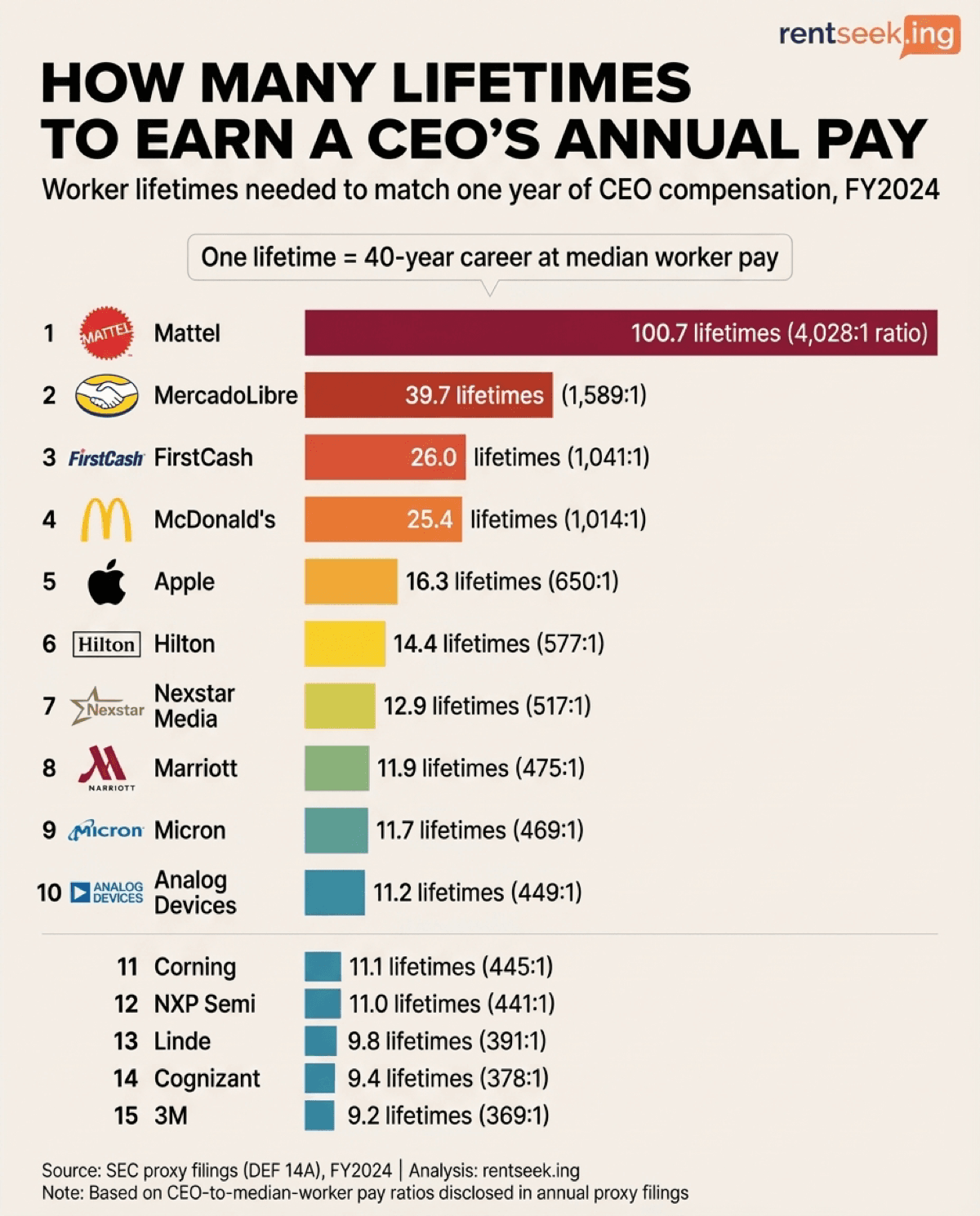
CEO Pay RatiosData Story
Ranked: How Many Lifetimes to Earn a CEO's Annual Pay
A 4,028:1 CEO pay ratio is abstract. Put into working time, Mattel's FY2024 ratio equals 100.7 full careers at the company's median employee pay.
Apr 26, 20266 min
Read briefing
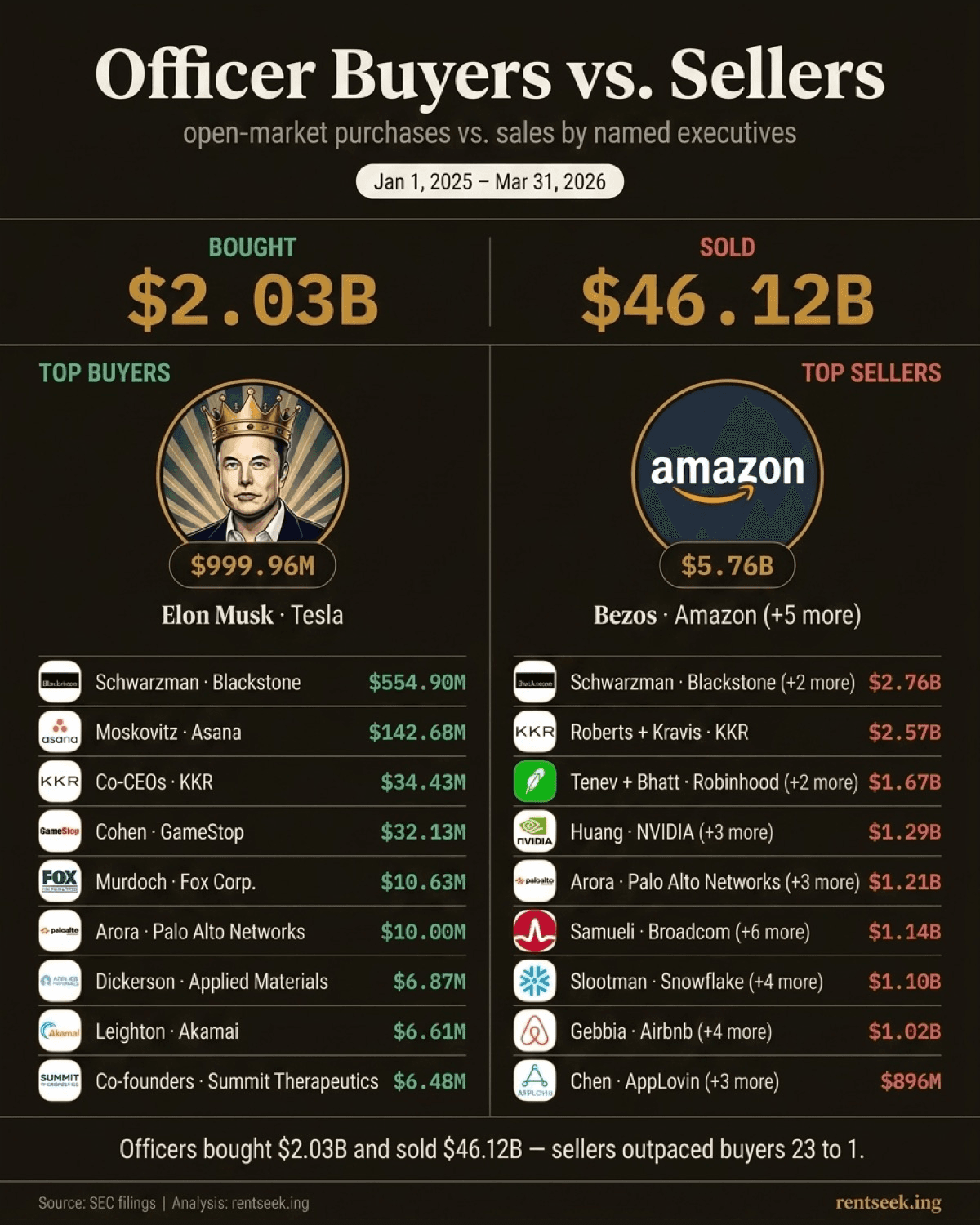
Insider Trading LedgerData Story
Officer Buyers vs. Sellers: The 23-to-1 Trading Gap
Named officers sold $46.12B of company stock and bought $2.03B from January 2025 through March 2026. The public Form 4 tape tilted heavily toward selling.
Apr 24, 20267 min
Read briefing
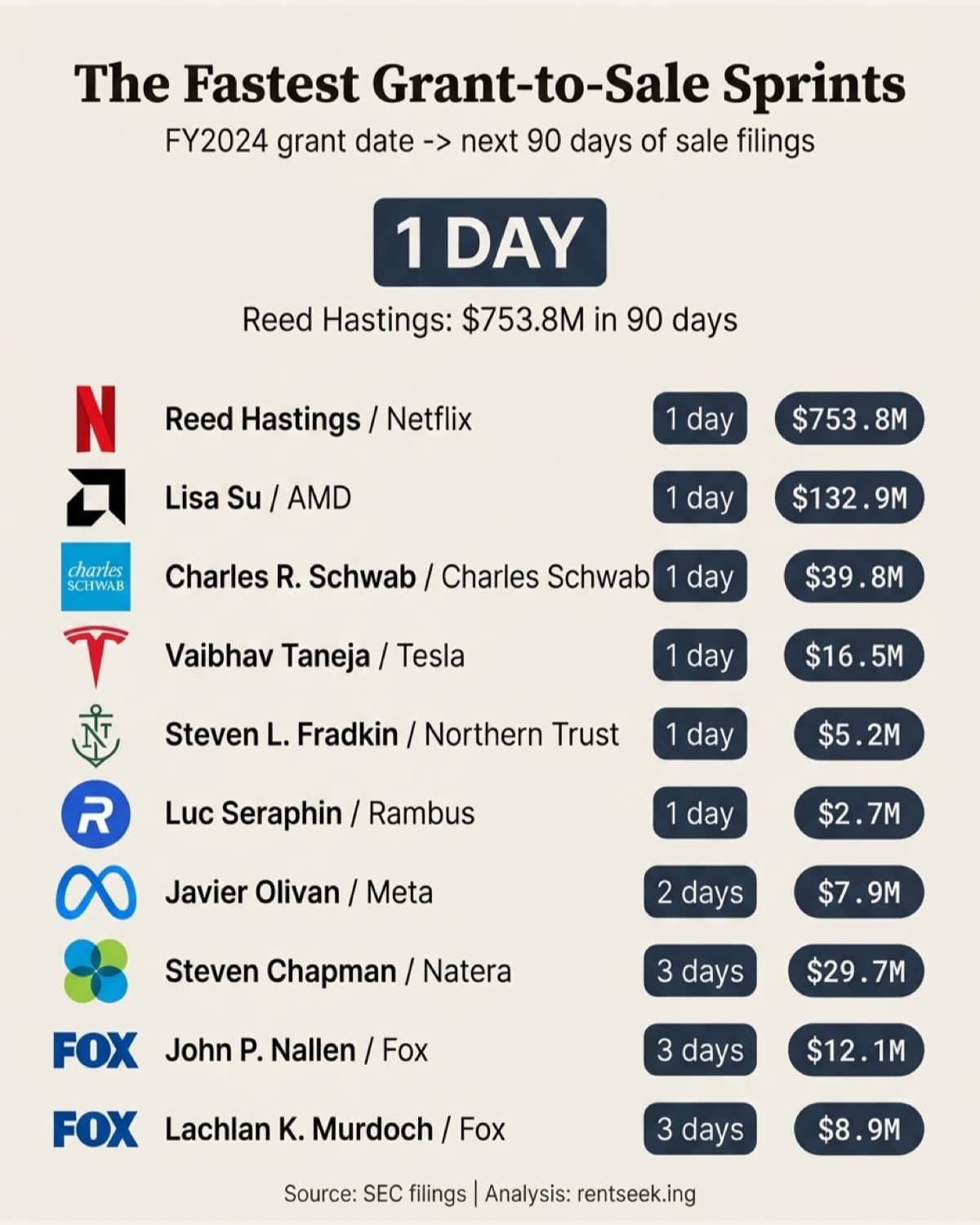
Grant-to-Sale ChronologyData Story
Fastest Grant-to-Sale Sprints: When Selling Starts After the Award
Some disclosed executive stock sales started one day after the grant date. This filing-backed cut lines up FY2024 grants with the next 90 days of sales.
Apr 24, 20266 min
Read briefing
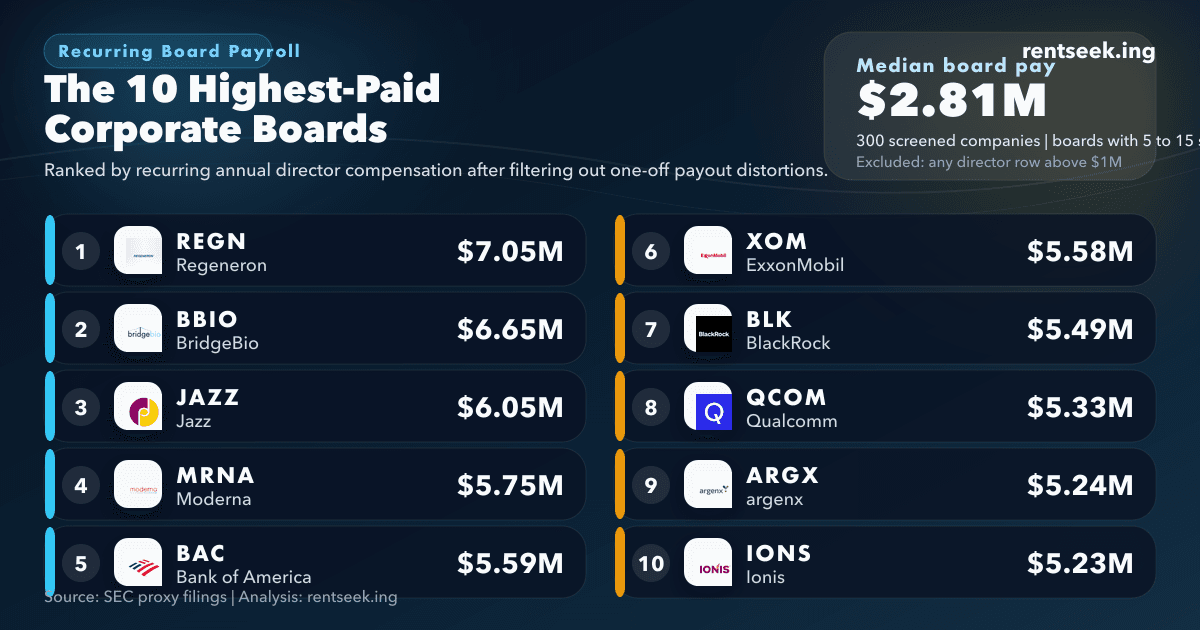
Board Pay RankingsData Story
Ranked: The 10 Highest-Paid Corporate Boards
A recurring board-pay ranking built from the latest proxy disclosures in our warehouse. It shows which companies spend the most on director oversight after filtering out one-time payout distortions.
Mar 31, 20266 min
Read briefing
Pay Up, Stock DownData Story
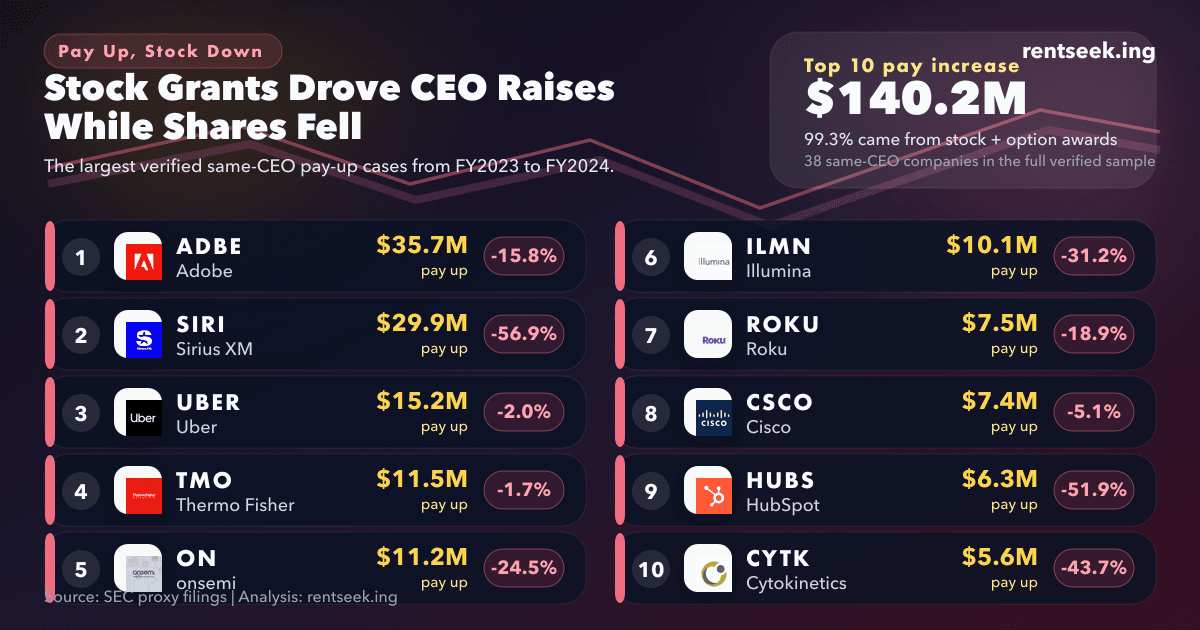
Stock Grants Drove CEO Raises While Shares Fell
In the biggest verified pay-up, stock-down cases from FY2023 to FY2024, almost all of the extra CEO pay came from stock and option awards rather than cash. Here is how boards used equity to raise pay during negative-return years.
Mar 31, 20267 min
Read briefing
Plain-English GuideExplainer
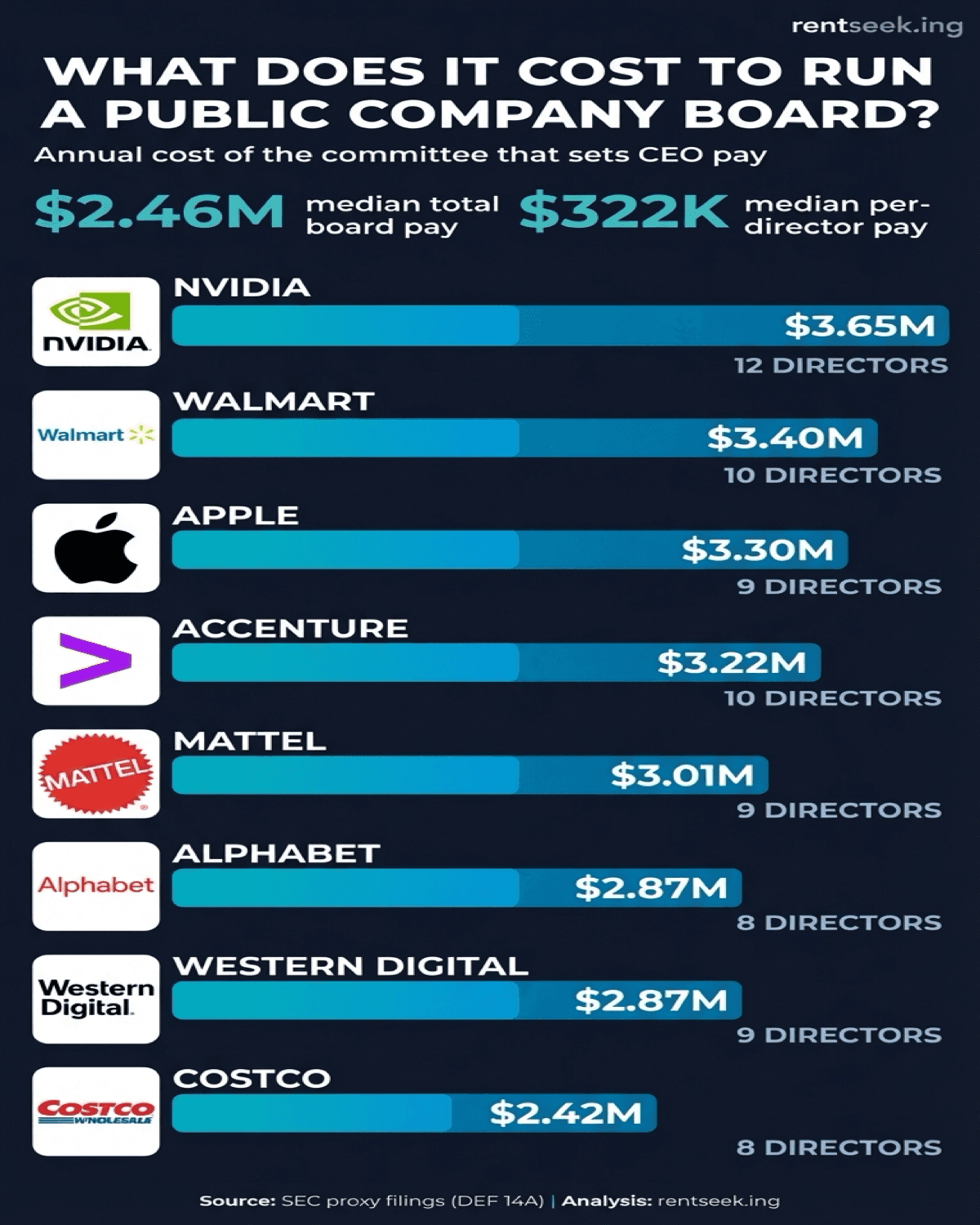
How Board Directors Get Paid
Board directors set CEO pay, approve strategy, and collect six-figure fees for part-time work. Here's how their compensation actually works — and why shareholders should pay attention.
Mar 11, 20267 min
Read briefing
Pay vs. PerformanceData Story
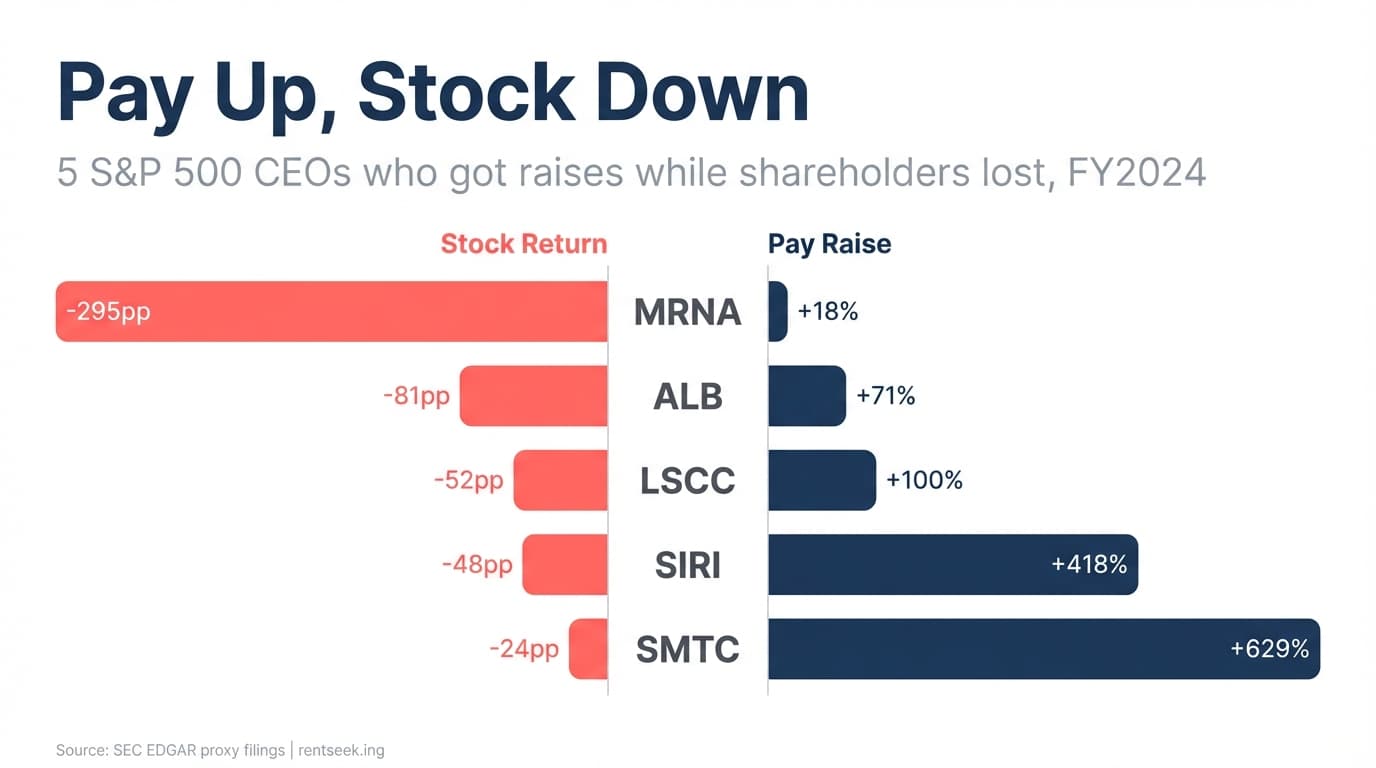
71 Companies Where the Board Raised CEO Pay While the Stock Fell
We tested 487 S&P 500 companies on a simple question: did the board raise CEO pay while shareholders lost money? 71 companies failed the test. 24 of those are wealth transfers — the CEO's realized pay rose too.
Feb 14, 20268 min
Read briefing
Plain-English Guide
Plain-English GuideExplainer
What Is Proxy Season? A Plain-English Guide (2026)
Proxy season happens every spring when public companies ask shareholders to vote. Here's what actually happens, why it matters to you, and what to watch for in 2026.
Feb 14, 20267 min
Read briefing
Plain-English GuideExplainer
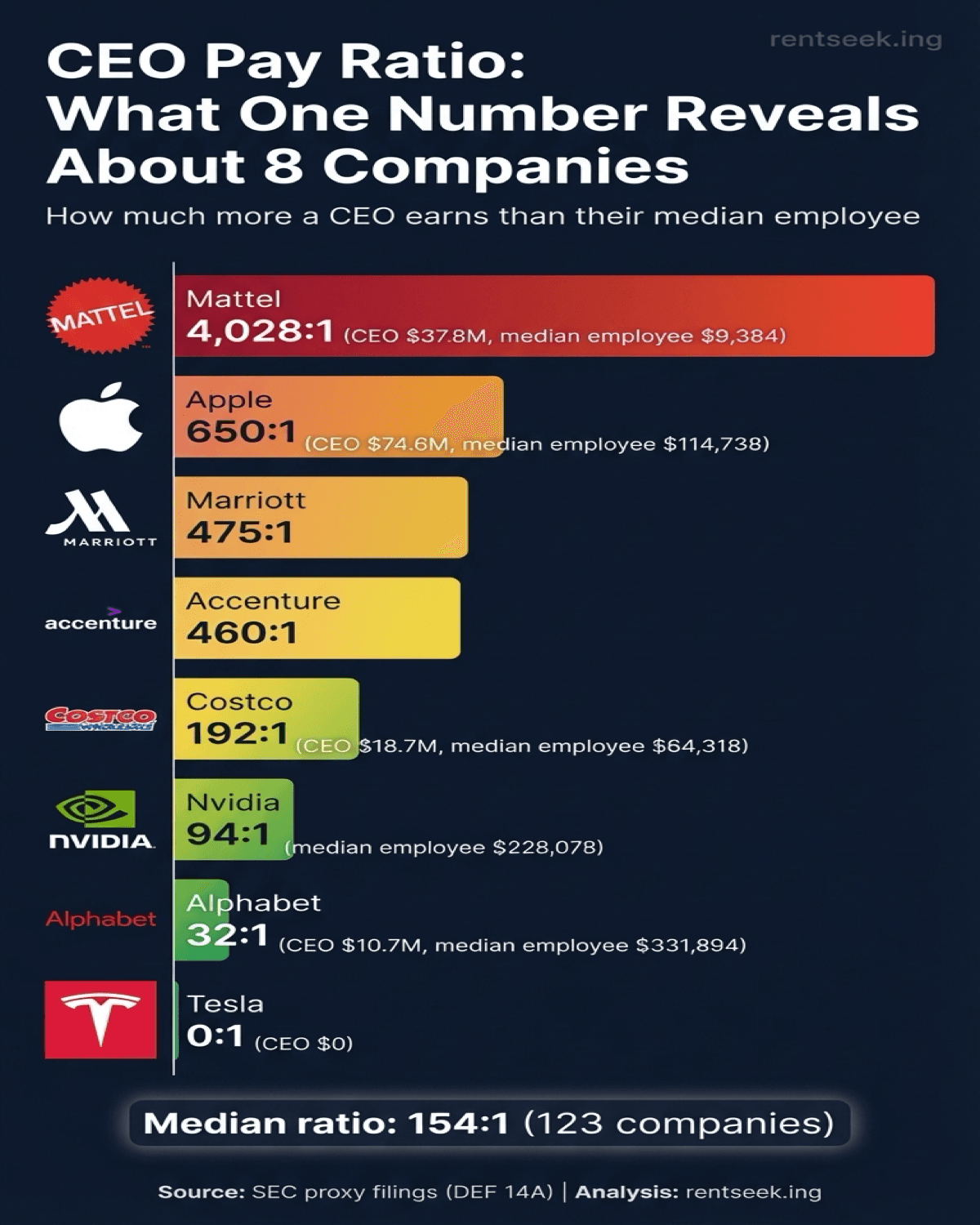
CEO Pay Ratios Explained: What They Mean and What They Hide
Every public company must disclose how much more their CEO earns than their median employee. The number is revealing — but it doesn't tell the whole story.
Feb 14, 20266 min
Read briefing
Data StudyData Story
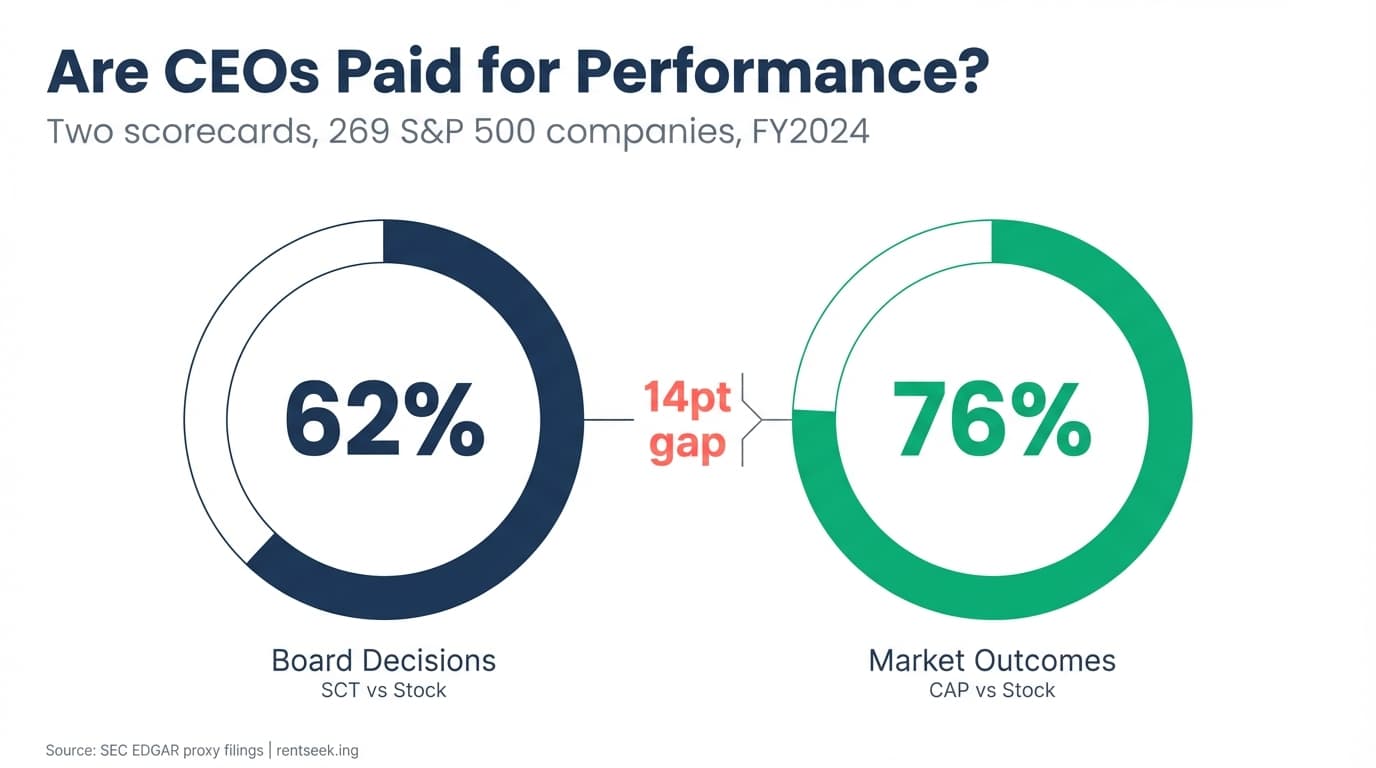
Are CEOs Paid for Performance? What 500 Companies' Data Actually Shows
We applied two tests — the board's scorecard and the market's — to 269 S&P 500 companies. Only 49.8% pass both. The 14-point gap reveals the stock market quietly correcting board decisions.
Feb 12, 202610 min
Read briefing
Get this data in your app: free API key, 100 credits.
Get a free API key